The short answer
Mobile home leveling — releveling, properly — means going under your home, finding every pier that has settled or shifted, and resetting the home back onto level, evenly-loaded supports. In Yuma it is one of the most common repairs there is, because our soil moves. A single-wide typically runs $450 to $600 and a double-wide $750 to $900 unless we find damage underneath. It usually takes most of a day. Call us and we will come look for free.
Signs your mobile home needs releveling
Your home tells you before it gets expensive. In rough order of how people notice:
- Doors stop latching. The number one sign, and the one every cost guide leads with. Interior doors that swing open by themselves, or a front door you have to lift to lock, mean the frame is racked out of square.
- Windows stick or the gap around them goes uneven — same cause.
- Cracks at corners. Drywall or panel cracks radiating from the corners of door and window openings. In a panelled older home, look for seams that have opened up.
- The floor feels wrong. A slope you can feel walking, or a spot that flexes. Set a marble down. If it will not sit still, that is your answer.
- Skirting buckles or gaps. When the home settles, the skirting is squeezed or stretched — it deforms before you notice anything inside.
- Something binds. Cabinet doors that will not stay shut, a shower door out of alignment, a wall that has separated slightly from a ceiling.
One of these can be humidity or a settled door hinge. Two or more together is level, almost every time.
Why homes go out of level in Yuma specifically
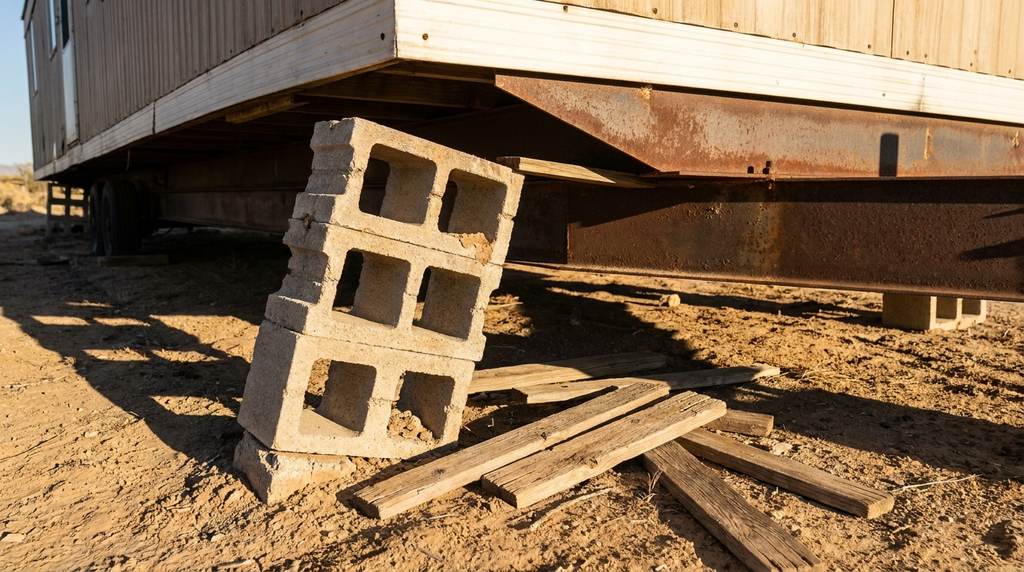
Your home is not on a foundation. It is sitting on stacks of concrete block on dirt, and the dirt here does not hold still.
- Sandy valley soil. Down in the Yuma valley, the ground is old Colorado River bottom — sand and silt. Sand compacts under concentrated load. Every pier is a concentrated load. Given a few years, they sink, and they never sink evenly.
- Caliche up on the mesas. In the Foothills you get caliche hardpan, which is the opposite problem: it is hard until it gets wet, and then it shifts. Pier pads set on caliche can rock and tilt.
- Water is the accelerant. A dripping hose bib, an irrigation line, a neighbor's runoff, a leaking swamp cooler line, or three inches of monsoon rain in one hour finding a low spot under your home. Wet soil under load moves fast. This is why leveling problems so often appear right after monsoon season.
- How it was set to begin with. Plenty of homes in this county were set decades ago on undersized pads or too few piers. They were never right; they just took thirty years to show it.
- Vacancy does not help. A home sitting closed up all summer with no one watching is a home where a small leak has five months to undermine a pier.
How releveling actually works
So you know what you are paying for:
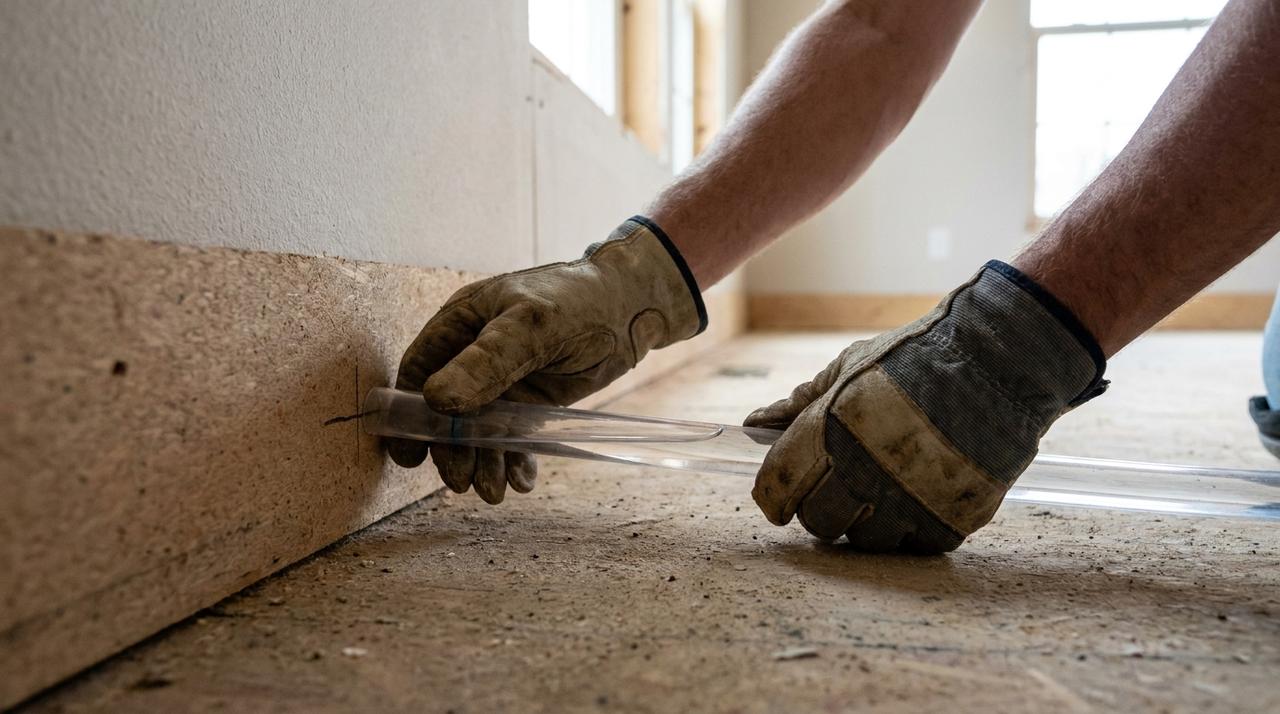
- We shoot the floor. A water level or laser across the whole home tells us where it actually sits — not where it feels like it sits. This is the step that separates a real relevel from someone shoving shims at the corner you complained about.
- We go under and read the piers. Every stack gets looked at: has it sunk, tilted, cracked, lost its shims, or is the pad broken? We check the chassis I-beams and sill area for damage while we are down there, because that is when you can see it.
- We jack at the chassis, in sequence. Hydraulic jacks under the frame, at real structural points, lifting a little at a time in a pattern across the home. This is the part that goes wrong when it goes wrong. Lift one corner too fast and you crack every wall on the way up.
- We rebuild the piers. Blocks reset, pads corrected or replaced where they have failed, hardwood shims driven to lock the load in. The goal is every pier carrying its share — not just the home reading level for an afternoon.
- We check the doors before we leave. The doors were how you found the problem. They are how you confirm it is fixed. If the home is right, they latch.
Most single-wides are a day. Double-wides can run longer, especially if the marriage line needs attention. If we open it up and find a rotted sill or a broken pad, we stop, show you, and re-quote before we keep going.
What mobile home leveling costs
Published 2026 figures, so you can sanity-check any quote you get — including ours: