Mobile Home Skirting Installation & Repair in Yuma

Skirting keeps animals out, shades the underside, protects your plumbing and stops monsoon wind from getting under your home. We install it vented right for this climate.

Call (928) 555-0143
Free estimates. Straight answers about what your home actually needs.
Mobile & Manufactured Homes Only
Yuma & the Foothills
Free On-Site Estimates
Park Model & Snowbird Friendly

Skirting damaged, missing or buckling?

Send us a photo or just describe it. We will tell you whether it is a panel problem, a track problem, or your home telling you the piers have moved. Call (928) 555-0143.

  • Free on-site estimate, written before work starts
  • We work on mobile, manufactured and park model homes only
  • Seasonal schedules welcome — we work around snowbird arrivals

The short answer

Skirting is the panel run that closes the gap between your home and the ground. In Yuma it does four jobs that matter: it keeps animals out, it shades the underside, it protects your plumbing and belly wrap, and it stops monsoon wind from getting under the home. We install and repair vinyl, insulated vinyl, metal and block skirting, vented correctly for desert heat. Call us for a free measure and quote.

What skirting is actually for

Most people think of it as the thing that makes the home look finished. It does, and if you are in a park your manager has opinions about it. But the real work is underneath:

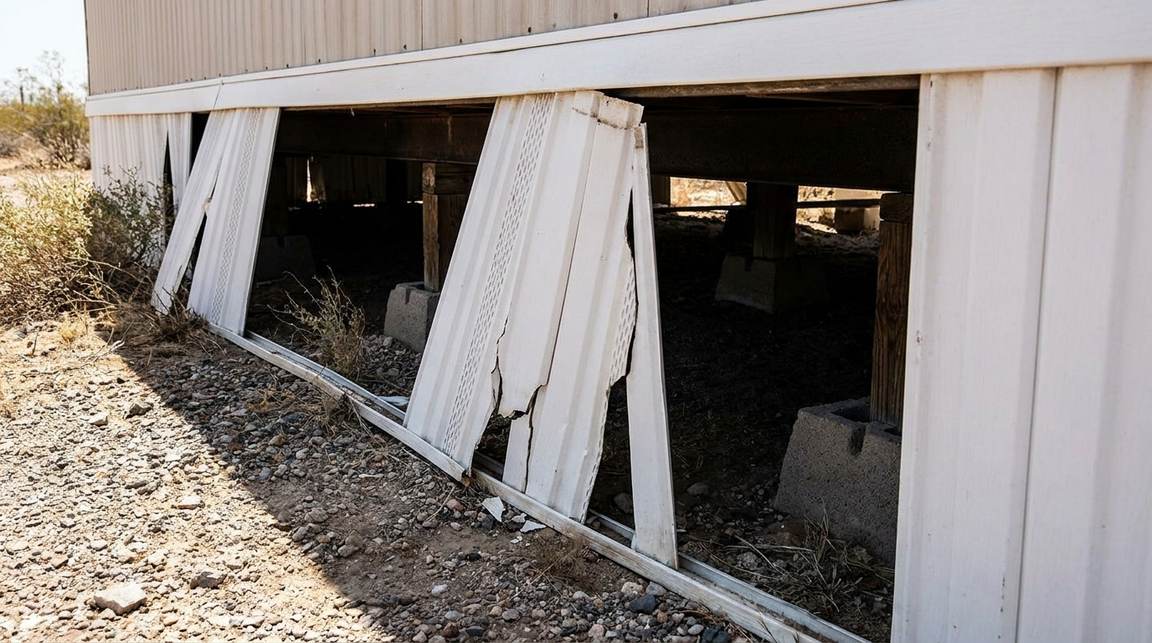
Failed vinyl skirting on a mobile home: brittle panels cracked and blown out of the bottom track, leaving the crawl space and pier blocks exposed.
Skirting that has gone brittle and blown out of its track. Once one panel lets go, the wind has a handle on the whole run — and everything the skirting was keeping out is now getting in.

Your material options

Mobile home skirting materials in a desert climate
MaterialHolds up in YumaWorth knowing
VinylGood, with caveatsMost common and most affordable. Goes brittle with years of UV — older panels crack when the wind flexes them. Easy and cheap to replace a run.
Insulated vinylGoodVinyl with a foam backer. Costs more, adds real R-value against the heat, and is stiffer so it takes wind better.
MetalVery goodWill not go brittle. Dents. Gets hot. A solid choice on the windward side of a home.
Block or simulated rockBestPermanent, looks like a foundation, ends the conversation. The most expensive option and the most work to install.

The part that gets done wrong: ventilation

Skirting has to breathe. A crawl space sealed up tight in this climate traps heat and moisture against the underside of your floor — and moisture under a manufactured home is how you get rot, mold and rodents. Every proper skirting job includes vents, spaced around the perimeter, sized to the home, and left unobstructed.

The two failures we see constantly: skirting installed with no vents at all, and vents that got buried behind landscaping rock or a flowerbed years after the fact. Both cause the exact problems the skirting was installed to prevent. If yours has no vents, that is worth fixing on its own.

The other part that gets done wrong: how it is attached

Skirting lives in a top track fastened to the home and a bottom track staked into the ground. When it is done right, wind pushes against a panel that has nowhere to go. When it is done cheap — screwed straight to the siding, or with a bottom rail just resting on the dirt — monsoon wind gets a finger under one panel and peels the whole run off like a zipper.

If your skirting comes off every summer, the panels are not the problem. Adding more panels to a bad track is buying the same failure again.

When buckled skirting is telling you something else

Here is the thing worth knowing before you spend money: skirting that suddenly buckles or gaps is often reporting a leveling problem, not a skirting problem. The panels are squeezed between your home and the ground. When piers settle, that gap changes, and the skirting deforms because it has nowhere to go.

So if your skirting buckled and, now that you think about it, the bedroom door has been sticking — do not re-skirt yet. Get the level checked first. Re-skirting a home that is still settling means doing it twice, and we would rather tell you that up front than take the job today and the same job again next year.

In Arizona, the people who level, anchor, set and structurally repair manufactured homes are licensed by the Arizona Department of Housing, Office of Manufactured Housing — not by the contractor board that covers stick-built homes. Ask any company you call for their license, and ask whether the work needs an installation permit. A real outfit will answer both without flinching.

Close up the underside of your home

Free on-site measure and a written quote. Vinyl, insulated, metal or block — vented properly for Yuma heat.

(928) 555-0143

Questions people in Yuma actually ask

How much does mobile home skirting cost?

It swings widely by material and how much of the home needs it. Vinyl is the most common and the most affordable; insulated vinyl costs more and pays some of it back on cooling; metal sits in the middle; block or simulated-rock costs the most and lasts the longest. A repair — replacing a run of panels the wind took — is a fraction of a full re-skirt. We quote after measuring, because the perimeter of your home and the ground it sits on determine almost everything.

Does skirting actually do anything, or is it just looks?

It does four real jobs. It keeps animals out from under your home, which in this county means rodents, snakes and cats getting into your belly wrap and ductwork. It shades the underside, which matters a great deal at 107 degrees. It protects your plumbing and vapor barrier from sun and weather. And it keeps wind from getting under the home during monsoon, which is a structural issue, not a cosmetic one. Looks are the fifth benefit, and the one your park manager cares about.

Why does skirting need vents?

Because a sealed crawl space in this climate traps heat and moisture, and moisture under a manufactured home is how floors rot and rodents move in. Vented skirting lets the underside breathe. Skirting installed with no ventilation, or with the vents blocked by landscaping, causes exactly the problems the skirting was supposed to prevent. This is one of the most common mistakes we see on DIY jobs.

The monsoon tore my skirting off. Is that normal?

Common, yes. Normal, no — it usually means it was not fastened into a proper top and bottom track, or the panels were brittle from years of UV. Wind gets under a loose panel and peels the run like a zipper. If your skirting comes off every monsoon, the answer is not more panels; it is fixing how it is attached.

My skirting suddenly buckled. What does that mean?

Often that your home moved, not that your skirting failed. Skirting is squeezed between the home and the ground — when the piers settle, the gap closes and the panels buckle. It is one of the earlier visible signs of a leveling problem. If your skirting buckled and your doors have also gotten harder to latch, get the level checked before you spend money on skirting.

Tap to Call — (928) 555-0143